
Contents
Cast Metal Partial Dentures in 2026: Costs, Benefits & Complete Guide
Missing several teeth but not ready for the commitment or expense of dental implants? A cast metal partial denture -- also known as a cast partial or framework partial -- remains one of the most trusted removable prosthetic solutions in American dentistry. It combines a precision-cast cobalt-chromium framework with natural-looking replacement teeth and gum-colored acrylic, delivering comfort, function, and durability at a fraction of the implant price.
In this 2026 guide, we cover everything US patients need to know: how cast metal partials work, what they cost, how they compare to other options including flexible partials and implant-supported bridges, how to care for them, and what your dental insurance is likely to cover.
What Is a Cast Metal Partial Denture
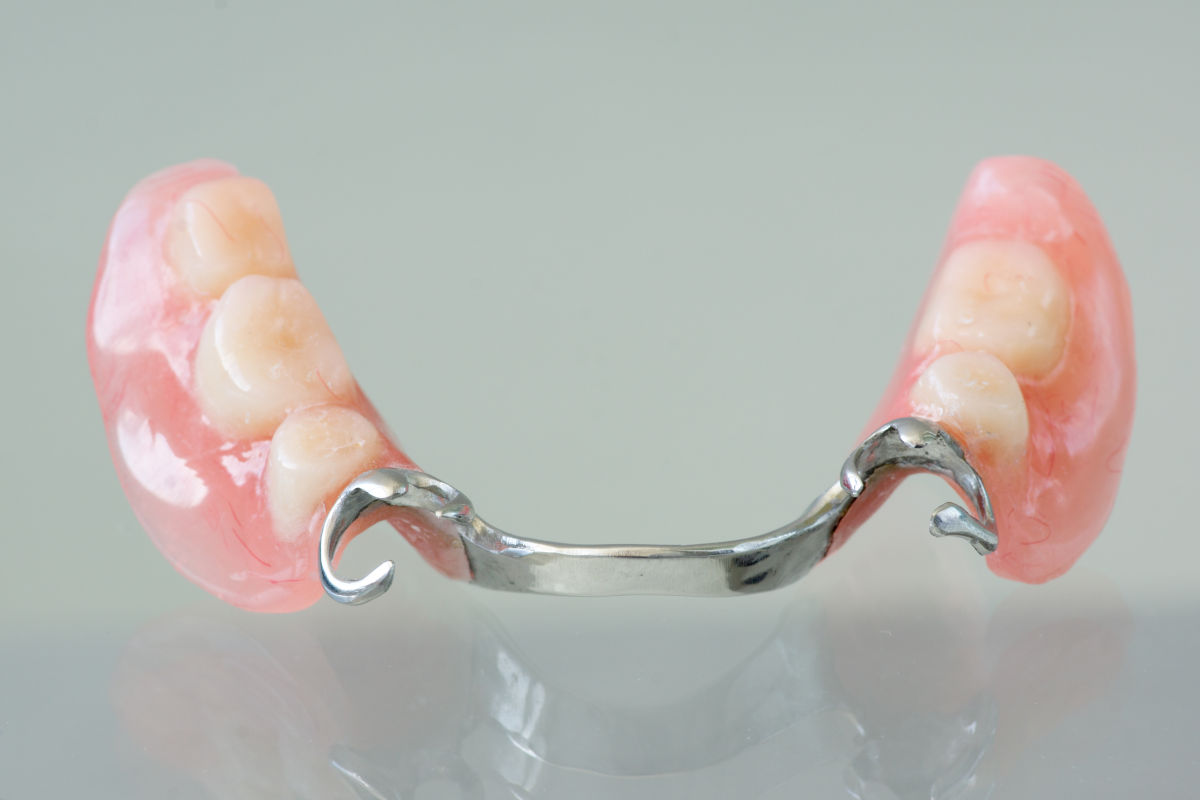
A cast metal partial denture is a removable dental prosthesis designed to replace one or more missing teeth in an arch when some natural teeth remain. Unlike a full denture, it relies on remaining healthy teeth for support and retention, using precision-engineered clasps and rests that grip and sit on specific tooth surfaces.
The appliance is fabricated in a dental laboratory using a lost-wax casting technique. A wax pattern of the metal framework is created on a master cast of the patient's mouth, then invested in a heat-resistant material and replaced with molten cobalt-chromium alloy. The result is an extremely thin yet strong metal skeleton that serves as the structural backbone of the prosthesis.
Components and Materials
A typical cast metal partial consists of several integrated components:
- Major connector: The main structural bar that links the right and left sides of the framework. For the upper jaw this is often a palatal plate or strap; for the lower jaw it is a lingual bar positioned behind the front teeth.
- Minor connectors: Smaller metal extensions that join the major connector to the clasps, rests, and denture bases.
- Clasps: Wire-like metal arms that wrap around abutment teeth (the natural teeth that anchor the partial). Circumferential and bar-type clasps are the two most common designs.
- Occlusal and cingulum rests: Small metal pads that sit in prepared rest seats on the natural teeth, preventing the partial from sinking into the gums under chewing pressure.
- Denture base and teeth: Gum-colored acrylic resin and prefabricated or custom prosthetic teeth attached to the framework in edentulous areas.
Good to Know: Cobalt-chromium alloy (CoCr) is the standard metal used in cast partials because it is biocompatible, corrosion-resistant, and exceptionally rigid even at thin cross-sections. Titanium frameworks are available but cost more and are harder to adjust chairside.
Who Is a Good Candidate
Cast metal partials are most appropriate for patients who have lost several teeth in one or both arches but retain enough healthy teeth to provide adequate support and retention. Ideal candidates have:
- At least four to six well-distributed remaining teeth per arch with adequate bone support.
- Teeth that can accept rest seats and clasps without compromising their structural integrity.
- Healthy gum tissue and reasonable oral hygiene habits.
- A desire for a cost-effective removable solution or a medical contraindication to implant surgery.
"A well-designed cast metal partial is still one of the best values in prosthodontics. When the remaining teeth are properly prepared and the framework is designed according to sound biomechanical principles, these appliances can serve patients comfortably for a decade or more."
Cast Metal Partials vs Other Tooth Replacement Options
Choosing the right tooth replacement depends on the number of missing teeth, budget, bone health, and personal preferences. Below is a comparative overview of the most common options available to US patients in 2026.
| Option | Avg. Cost (Per Arch) | Lifespan | Removable? | Best For |
|---|---|---|---|---|
| Cast Metal Partial | $1,500 - $3,500 | 7-15 years | Yes | Multiple missing teeth, budget-conscious patients |
| Acrylic (Flipper) Partial | $600 - $1,500 | 2-5 years | Yes | Temporary or transitional use |
| Flexible (Valplast) Partial | $1,200 - $3,000 | 3-8 years | Yes | Patients wanting clasp-free aesthetics |
| Fixed Bridge | $2,500 - $6,000 (3-unit) | 10-20 years | No | 1-2 missing teeth with strong adjacent teeth |
| Dental Implants | $3,500 - $6,000+ per tooth | 20+ years | No | Long-term solution, adequate bone available |
The Fabrication Process Step by Step
Getting a cast metal partial denture is a multi-appointment process that typically spans 3 to 6 weeks from start to finish. Here is what to expect:
- Comprehensive examination: Your dentist evaluates your remaining teeth, gum health, and jawbone with X-rays and a clinical exam. Any necessary preparatory treatment -- fillings, extractions, periodontal therapy -- is completed first.
- Preliminary impressions: Alginate or digital impressions capture the shape of both arches. These are sent to the dental lab to create diagnostic casts.
- Treatment planning and mouth preparation: The dentist and lab technician collaborate on the framework design. Rest seats are then prepared on the abutment teeth, which involves removing a small amount of enamel to create flat platforms for the metal rests.
- Final impressions: Precision impressions (usually with polyvinyl siloxane or a digital scanner) are taken after mouth preparation. A bite registration records how the upper and lower teeth come together.
- Framework try-in: The cast metal framework arrives from the lab. The dentist checks its fit, stability, and how the clasps engage the teeth, making any necessary adjustments.
- Tooth setup and wax try-in: The lab sets the prosthetic teeth in wax on the framework. The patient tries this version in to verify aesthetics, bite, and comfort.
- Final processing and delivery: The lab replaces the wax with permanent acrylic, polishes the prosthesis, and returns it for final insertion. The dentist makes occlusal adjustments and provides care instructions.
Good to Know: Some dental offices now use CAD/CAM technology and 3D metal printing to fabricate cast partial frameworks. While not yet the industry standard, digital workflows can reduce laboratory turnaround time and improve framework fit accuracy.
Cost of Cast Metal Partial Dentures in 2026
In the United States, the cost of a cast metal partial denture in 2026 generally falls between $1,500 and $3,500 per arch, depending on the number of teeth being replaced, the complexity of the framework design, and geographic location. Practices in major metropolitan areas like New York, Los Angeles, or Chicago tend to charge at the higher end of the range, while offices in smaller cities and rural areas may be closer to the lower end.
Additional costs may include preparatory dental work such as fillings, crowns on abutment teeth, or extractions, which are billed separately. Follow-up adjustments within the first few months after delivery are often included in the initial fee.
Insurance Coverage and Payment Options
Most PPO dental insurance plans classify removable partial dentures as a "major" restorative service, typically covering 50% of the allowed fee after the annual deductible has been met. However, many plans impose a waiting period of 12 months for major services if you are a new enrollee, and most have an annual maximum benefit ranging from $1,000 to $2,500.
| Coverage Scenario | Estimated Patient Cost | Notes |
|---|---|---|
| PPO plan, 50% coverage, $2,500 partial | ~$1,250 + deductible | Most common scenario |
| DHMO plan with copay schedule | $400 - $900 copay | Must use in-network provider |
| No dental insurance | $1,500 - $3,500 | Ask about payment plans or dental discount programs |
| Medicaid (varies by state) | $0 - minimal copay | Coverage varies significantly; some states cover partials, others do not |
For patients without insurance, many dental offices offer in-house financing or accept third-party payment plans through companies like CareCredit or Lending Club, which can spread the cost over 12 to 60 months, sometimes with promotional zero-interest periods.
Warning: Be cautious of unusually low-priced partial dentures advertised online or by discount clinics. A poorly designed framework can damage abutment teeth, cause sore spots, and may need to be remade entirely, costing you more in the long run.
Caring for Your Cast Metal Partial
Proper daily maintenance is essential to extend the life of your cast metal partial and protect the health of your remaining natural teeth and gums. Follow these care guidelines recommended by the ADA:
- Clean after every meal: Remove the partial and rinse it under running water. Use a soft denture brush with a non-abrasive denture cleanser or mild hand soap to remove food particles and plaque. Avoid regular toothpaste, which can scratch the acrylic.
- Soak overnight: Place the partial in a denture-cleaning solution or plain water overnight. This prevents the acrylic from drying out and warping and helps loosen any remaining plaque or calculus.
- Brush your natural teeth: With the partial removed, thoroughly brush and floss all remaining teeth, paying special attention to the abutment teeth that support the clasps.
- Handle with care: Always remove and insert the partial over a folded towel or a basin of water to prevent damage if dropped.
- Schedule regular checkups: Visit your dentist at least twice a year for a professional cleaning and to have the partial examined for fit, wear, and any needed adjustments.
"The number one reason cast partials fail prematurely is not the appliance itself -- it is neglect of the abutment teeth. If you lose a key abutment tooth to decay or gum disease, the entire framework design may need to be remade. Keeping those anchor teeth healthy is paramount."
Advantages and Disadvantages
Like any prosthetic solution, cast metal partial dentures come with trade-offs. Here is an honest assessment:
Advantages:
- Superior strength and rigidity compared to all-acrylic or flexible partials.
- Thinner framework means less bulk in the mouth and better comfort.
- Good thermal conductivity allows you to feel hot and cold foods naturally.
- Excellent longevity (7-15 years) when maintained properly.
- Can be modified if additional teeth are lost by adding teeth to the existing framework.
- More affordable than implants or fixed bridges for multiple missing teeth.
Disadvantages:
- Metal clasps may be visible when smiling, depending on their location.
- Requires healthy abutment teeth for support; losing these teeth compromises the appliance.
- Upper partials with palatal coverage can affect taste perception and speech initially.
- Takes time to adapt; new wearers may experience mild soreness or excess salivation for the first 1-2 weeks.
- Cannot prevent bone resorption in edentulous areas (only implants can do this).
Warning: Never attempt to adjust a cast metal partial yourself with pliers, files, or bending. Improper adjustments can weaken the metal, damage clasps, and cause harm to your teeth. Always have adjustments done by your dentist.
Frequently Asked Questions
How long does a cast metal partial denture last?
With proper care and regular dental checkups, a cast metal partial denture can last 7 to 15 years. The metal framework itself is virtually indestructible under normal use; it is usually the acrylic teeth and denture base that show wear first and may need to be replaced or relined during the life of the appliance.
Can a cast metal partial be adjusted if I lose more teeth?
Yes, one of the key advantages of a cast metal partial is its adaptability. If you lose an additional tooth, your dentist can often add a replacement tooth to the existing framework without fabricating an entirely new prosthesis. However, if a key abutment tooth is lost, a new framework design may be necessary.
Should I sleep with my partial denture in?
The ADA recommends removing removable prostheses at night to give your gum tissue time to recover and to reduce the risk of fungal infections like denture stomatitis. Soak the partial in a cleaning solution or water while you sleep. If you prefer to sleep with it in for social or comfort reasons, discuss this with your dentist.
What happens if my cast metal partial breaks?
If an acrylic tooth breaks off or the denture base cracks, a dental lab can usually repair it within one to two days. If the metal framework itself fractures, which is rare, the partial will likely need to be remade. Never use household glue to repair a dental prosthesis, as these adhesives are toxic and will not provide a durable bond.
Are flexible partials better than cast metal?
Flexible partials (such as Valplast) offer superior aesthetics because they use tooth-colored clasps instead of visible metal, and they are virtually unbreakable. However, they are generally considered less rigid, harder to reline or repair, and have a shorter average lifespan (3-8 years) compared to cast metal partials (7-15 years). The best choice depends on your priorities: aesthetics favor flexible, longevity and function favor cast metal.
Sources
- American College of Prosthodontists. "Removable Partial Dentures: A Clinical Guide." ACP Clinical Practice Guidelines, 2023.
- Carr AB, Brown DT. "McCracken's Removable Partial Prosthodontics." 13th Edition, Elsevier, 2022.
- American Dental Association. "Removable Partial Dentures: What You Should Know." ADA Patient Resources, 2024.
- National Association of Dental Plans. "2025 Dental Benefits Report." NADP, 2025.
- Wenz HJ, Zdefined A, 10-year follow-up study on cast metal and flexible partial dentures. Journal of Prosthetic Dentistry, 2023; 129(3): 401-408.
- Centers for Medicare and Medicaid Services. "Medicaid Dental Benefits by State." CMS.gov, updated 2025.
- Frank RP, Brudvik JS, Nicholls JI. "A Comparison of the Flexibility of Wrought Wire and Cast Circumferential Clasps." Journal of Prosthetic Dentistry, 2021; 125(2): 218-224.