
Contents
Dental Implant Cost Breakdown: Full Pricing Guide for 2026
Dental implants are widely recognized as the gold standard for replacing missing teeth, offering unmatched durability, function, and aesthetics compared to bridges and dentures. But the cost remains a primary concern for most patients considering this treatment. In 2026, a single dental implant in the United States costs between $3,500 and $6,500 on average, with significant variation based on location, materials, practitioner experience, and the complexity of your individual case.
This comprehensive pricing guide breaks down every component that contributes to the total cost, explains why prices differ so dramatically between practices, compares implants to alternatives on a long-term value basis, and outlines proven strategies for making this investment more affordable.
Good to Know: While the upfront cost of dental implants is higher than bridges or dentures, the American Academy of Implant Dentistry notes that implants can last 25 years or more with proper care -- making their cost per year of service often lower than alternatives that need replacement every 5 to 15 years.
What Makes Up the Total Cost of a Dental Implant
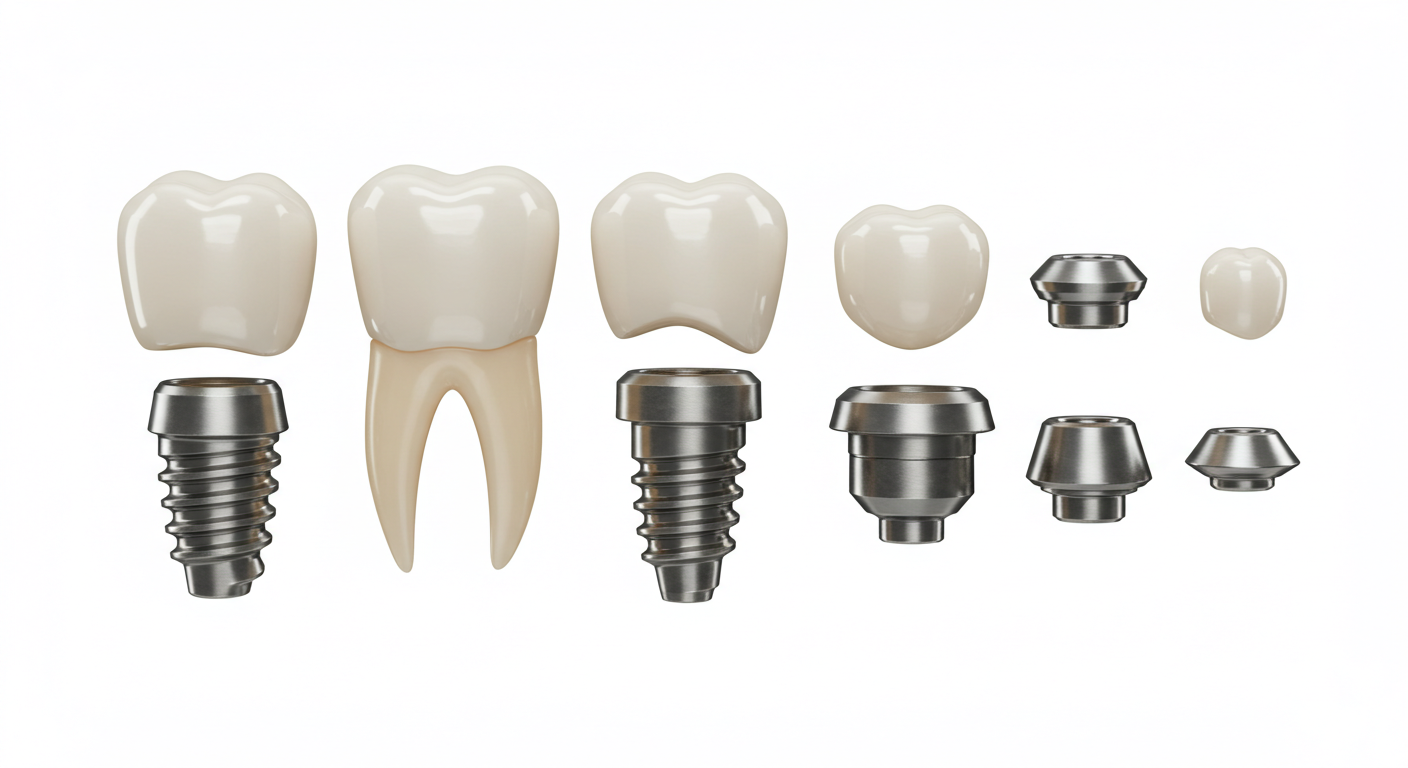
A dental implant is not a single device but a three-part system, and each component has its own cost. Understanding this breakdown is essential for evaluating quotes from different dental offices.
The implant post (also called the fixture) is a titanium or zirconia screw that is surgically placed into the jawbone to serve as an artificial tooth root. This is the most technically demanding part of the procedure. In 2026, the implant post alone typically costs $1,600 to $3,200, which includes the surgeon's fee, the cost of the implant hardware, and the use of surgical guides and imaging.
The abutment is a small connector that attaches to the top of the implant post and supports the final crown. Abutments can be stock (prefabricated) or custom-made. Custom abutments provide a better fit and more natural gum contour but cost more. Abutment pricing in 2026 ranges from $500 to $1,200.
The implant crown is the visible tooth-like restoration that sits on top of the abutment. Crown materials include porcelain-fused-to-metal (PFM), all-ceramic, and zirconia. Zirconia crowns are the most durable and aesthetically pleasing option available in 2026 and are increasingly the material of choice. Crown costs range from $1,200 to $2,500.
| Component | Low Estimate | Average | High Estimate |
|---|---|---|---|
| Implant Post | $1,600 | $2,400 | $3,200 |
| Abutment | $500 | $800 | $1,200 |
| Crown | $1,200 | $1,800 | $2,500 |
| Total (Single Implant) | $3,300 | $5,000 | $6,900 |
Beyond the three core components, several additional procedures may be required depending on your clinical situation:
- Tooth extraction: $150 to $650 per tooth (simple vs. surgical extraction)
- Bone graft: $300 to $3,000 depending on the type and volume of graft material
- Sinus lift: $1,500 to $3,500 for upper jaw implants where bone height is insufficient
- CT scan / 3D imaging: $200 to $600 for precise surgical planning
- Temporary prosthesis: $200 to $1,000 to wear during the healing period
"I always tell my patients to think of the implant quote as a total treatment cost, not just the cost of the screw. When you factor in imaging, possible bone grafting, the abutment, and the crown, the real number is always higher than what people initially expect."
Single Implant Costs Across the US in 2026
Dental implant costs vary meaningfully by geographic region. Major metropolitan areas and coastal cities tend to charge more due to higher overhead costs (rent, salaries, malpractice insurance), while mid-sized cities and rural areas are generally more affordable. Here is a snapshot of average single-implant costs (post + abutment + crown) across different regions in 2026:
- New York City / Los Angeles / San Francisco: $5,500 to $7,500
- Chicago / Boston / Seattle: $4,500 to $6,500
- Dallas / Atlanta / Denver: $4,000 to $5,500
- Phoenix / Nashville / Charlotte: $3,500 to $5,000
- Midwest and rural areas: $3,000 to $4,500
Warning: Be cautious of implant advertisements offering prices significantly below these ranges (for example, "$999 dental implants"). These promotions typically quote the price of the implant post only, excluding the abutment, crown, imaging, and any necessary preparatory procedures. The final bill is almost always substantially higher.
Multiple Implants and Full-Mouth Restoration Pricing
When multiple teeth need to be replaced, costs increase but there are economies of scale. A two-implant bridge (replacing three adjacent teeth) costs less than three individual implants. Full-mouth restorations use strategic implant placement to support an entire arch of teeth.
| Procedure | Number of Implants | 2026 Price Range |
|---|---|---|
| Implant-supported bridge (3 teeth) | 2 | $6,000 - $12,000 |
| Implant-supported bridge (4-6 teeth) | 2 - 3 | $8,000 - $18,000 |
| All-on-4 (full arch, acrylic) | 4 | $20,000 - $30,000 |
| All-on-4 (full arch, zirconia) | 4 | $28,000 - $40,000 |
| All-on-6 (full arch, zirconia) | 6 | $30,000 - $50,000 |
| Full-mouth (both arches) | 8 - 12 | $45,000 - $90,000+ |
Why Dental Implant Prices Vary So Much
Geographic Price Differences
Location is one of the biggest price drivers. A dental practice in Manhattan pays dramatically more in rent, staff salaries, and operating costs than a practice in a mid-sized Midwestern city. These overhead differences are passed on to patients. Additionally, cost of living in the area influences what the local market will bear in terms of dental fees.
The type of provider also matters. A board-certified oral surgeon or periodontist typically charges more for implant placement than a general dentist who also places implants, reflecting their additional years of specialty training and experience with complex cases.
Material and Brand Differences
Not all implant systems are created equal. Premium implant brands like Straumann, Nobel Biocare, and BioHorizons invest heavily in research, manufacturing quality, and long-term clinical data. Their implants cost the dental office more to purchase, which is reflected in the patient price. More affordable implant systems exist, and many perform well, but they may have less published long-term outcome data.
Crown material is another significant variable. A porcelain-fused-to-metal crown costs less than a monolithic zirconia crown, but zirconia offers superior strength, translucency, and biocompatibility. For front teeth where aesthetics are paramount, premium materials are worth the investment.
"When patients ask me why my implants cost what they do, I explain that the implant post alone accounts for only about 10-15% of the total fee. The rest covers surgical expertise, 3D planning technology, premium materials, sterilization protocols, and years of follow-up care."
Insurance Coverage and Out-of-Pocket Reality
Most dental insurance plans in 2026 classify implants as a major restorative procedure and cover them at 50% of the allowed amount, subject to an annual maximum. The problem is that annual maximums are typically $1,500 to $2,500, which covers only a fraction of the total implant cost. For a $5,000 implant, your insurance might contribute $1,250 to $2,000, leaving you responsible for $3,000 or more.
Strategies to maximize insurance benefits include spreading treatment across two calendar years to use two annual maximums, coordinating benefits between two plans if available, and using pre-tax HSA or FSA funds for your out-of-pocket share.
Good to Know: Some employers now offer supplemental dental buy-up plans with annual maximums of $3,000 to $5,000 specifically designed for employees anticipating major dental work. Ask your HR department about these options during open enrollment.
Ways to Reduce Your Dental Implant Costs
Even without ideal insurance coverage, there are legitimate ways to reduce the financial burden of dental implants in 2026:
- Dental school clinics: Accredited dental school programs at universities like NYU, UCLA, and the University of Michigan offer implant placement at 30-50% below private practice rates. Work is performed by supervised residents using the same materials and techniques as private offices.
- Community health centers: Federally Qualified Health Centers (FQHCs) offer dental services on a sliding fee scale based on income. Some offer implant services at reduced rates.
- Medical financing: Companies like CareCredit, Lending Club, and Proceed Finance offer 0% promotional interest periods of 6 to 24 months. If you can pay off the balance within the promotional period, you pay no interest at all.
- In-office membership plans: Many dental practices offer their own membership plans for uninsured patients, providing 10-20% discounts on all procedures including implants for an annual fee of $200 to $400.
- Negotiate and compare: Get quotes from at least three providers. Some offices offer a price match or discount for cash payment. Do not be afraid to ask -- many practices have flexibility in their pricing.
- Dental tourism: Treatment in Mexico, Costa Rica, or Colombia can cost 50-70% less. However, this approach carries risks related to follow-up care, warranty coverage, and managing complications from abroad.
Warning: Deferred-interest financing (like CareCredit's promotional offers) can be a trap if you do not pay the full balance before the promotional period ends. If any balance remains, you will be charged the full accumulated interest -- often at rates of 26-29% APR -- retroactively applied from the date of purchase.
Dental Implants vs Alternatives Cost Comparison
To fully appreciate the value proposition of dental implants, you need to compare them to alternatives not just on upfront cost but on total lifetime cost. A bridge that costs $3,000 today but needs replacement in 10 years ends up costing $6,000 or more over 20 years, while an implant placed once may last the same 20 years at its original cost.
| Treatment Option | Upfront Cost | Expected Lifespan | 20-Year Cost |
|---|---|---|---|
| Single dental implant | $3,500 - $6,500 | 25+ years | $3,500 - $6,500 |
| 3-unit dental bridge | $2,500 - $5,000 | 7 - 15 years | $5,000 - $10,000 |
| Partial denture | $500 - $2,500 | 5 - 8 years | $1,500 - $7,500 |
| Complete denture (per arch) | $1,000 - $3,500 | 5 - 10 years | $2,000 - $10,500 |
| No treatment | $0 | N/A | Bone loss + shifting teeth costs |
Beyond dollar amounts, implants preserve jawbone density (preventing the bone resorption that occurs under bridges and dentures), protect adjacent healthy teeth (bridges require grinding down neighboring teeth), and restore near-natural chewing ability and speech clarity.
Frequently Asked Questions
Is it cheaper to get dental implants abroad
Yes, dental tourism can reduce implant costs by 50-70%. Popular destinations include Mexico ($1,200 to $2,500 per implant), Costa Rica ($1,500 to $2,800), Colombia ($1,400 to $2,400), and Turkey ($800 to $1,500). However, you must factor in travel expenses, time off work, and the significant challenge of managing follow-up care and complications from thousands of miles away. If an implant placed abroad fails six months later, you will pay full US prices for remediation with no warranty coverage.
How much do All-on-4 implants cost in 2026
All-on-4 treatment (a full arch of fixed teeth supported by four implants) costs between $20,000 and $30,000 per arch for an acrylic prosthesis and $28,000 to $40,000 per arch for a zirconia prosthesis. Both arches together range from $45,000 to $80,000. While expensive, All-on-4 is typically less costly than placing 6 to 8 individual implants with separate crowns, and the treatment can often be completed in a single day with immediate temporary teeth.
Do dental implants last a lifetime
The titanium implant post itself can last a lifetime with proper oral hygiene and regular dental check-ups. Studies show 95% implant survival rates at 10 years and 90% or higher at 20 years. However, the crown on top of the implant is subject to normal wear and tear and may need replacement every 15 to 25 years. Factors that shorten implant lifespan include smoking, uncontrolled diabetes, poor oral hygiene, teeth grinding (bruxism), and lack of regular professional maintenance.
Can I finance dental implants with bad credit
Several options exist for patients with less-than-perfect credit. Some dental offices offer in-house payment plans that do not require a credit check. Companies like Proceed Finance specialize in medical financing for applicants with lower credit scores, though interest rates will be higher. Dental schools and community health centers offer reduced fees regardless of credit. Some practices also accept layaway-style prepayment plans where you pay over several months before treatment begins.
Are mini implants cheaper than regular implants
Yes, mini dental implants (MDIs) typically cost $500 to $1,500 per implant, significantly less than standard implants. They are narrower in diameter and can often be placed without a surgical flap, reducing both cost and recovery time. However, mini implants are not appropriate for all situations. They are best suited for stabilizing lower dentures or replacing small teeth. For single-tooth replacement of molars or areas with high chewing force, standard implants remain the recommended choice due to their superior load-bearing capacity and long-term durability.
Sources
- American Dental Association. "2025 Survey of Dental Fees." ADA Health Policy Institute, 2025.
- American Academy of Implant Dentistry. "Dental Implant Facts and Figures." AAID, 2025.
- Journal of Dental Research. "Cost-Effectiveness Analysis of Dental Implants Versus Fixed Bridges: A 20-Year Model." Vol. 104, Issue 5, 2025.
- International Journal of Oral and Maxillofacial Implants. "Long-Term Survival Rates of Dental Implants: A Systematic Review." Vol. 40, Issue 3, 2025.
- National Association of Dental Plans. "Annual Dental Benefits Report." NADP, 2025.
- American College of Prosthodontists. "Position Statement on Dental Implant Economics." ACP, 2025.
- Journal of Prosthetic Dentistry. "Material Selection for Implant-Supported Restorations: Current Trends." Vol. 133, Issue 1, 2026.
- Consumer Financial Protection Bureau. "Medical Financing: What Patients Need to Know About Promotional Interest Offers." CFPB, 2025.