
Contents
How to Clean Invisalign Aligners in 2026: Crystals, DIY Solutions & Pro Tips
More than 15 million people worldwide have used Invisalign aligners to straighten their teeth, and that number continues to climb in 2026. While the clear trays offer a virtually invisible path to a better smile, many patients underestimate one critical step: keeping the aligners clean. Dirty trays do not just look and smell bad -- they can actually undermine your entire treatment and put your oral health at risk.
This comprehensive guide covers every proven cleaning method available in 2026, from Invisalign's own cleaning crystals to budget-friendly DIY options, ultrasonic devices, and effervescent tablets. You will learn exactly which approach fits your lifestyle, what each one costs, and what mistakes to avoid so your aligners stay crystal clear from day one through your final tray.
Good to Know: The American Dental Association (ADA) recommends cleaning removable oral appliances at least once daily with a nonabrasive cleaner. Aligners worn 20 to 22 hours a day collect bacteria at a much faster rate than nighttime-only retainers, making consistent cleaning essential.
Why Cleaning Your Invisalign Aligners Matters More Than You Think
Your Invisalign trays sit against your teeth for the vast majority of each day. That tight seal, which is precisely what makes them effective at moving teeth, also creates a warm, moist environment where bacteria thrive. Understanding the specific risks helps you appreciate why a quick rinse under the faucet is never enough.
Bacterial Buildup and Oral Health Risks
Research published in the Journal of Clinical Orthodontics has shown that removable aligners harbor significantly more Streptococcus mutans -- the primary bacterium responsible for cavities -- than the oral environment alone. When plaque accumulates on your trays, it is pressed directly against your enamel for hours at a time, dramatically increasing the risk of demineralization, white spot lesions, and full-blown cavities.
Beyond cavities, unclean aligners are associated with higher rates of gingivitis and oral candidiasis (thrush). The gum tissue becomes inflamed as bacterial biofilms transfer from the tray surface, and the enclosed environment can encourage fungal overgrowth in susceptible patients.
"Patients who maintain a disciplined aligner hygiene protocol experience significantly fewer decalcification events and periodontal complications during treatment compared to those who clean sporadically."
Staining and Odor Problems
Even if you avoid drinking coffee while wearing your trays, microscopic food particles and salivary proteins still coat the plastic throughout the day. Over time these deposits oxidize and turn the aligners yellow or cloudy, defeating the purpose of a "clear" treatment. Bacterial metabolism of these organic residues also produces volatile sulfur compounds, which are the same molecules responsible for bad breath. Patients frequently report that their aligners develop an unpleasant smell within 48 hours if they skip proper cleaning.
The Best Methods for Cleaning Invisalign Aligners in 2026
There are five main approaches to keeping your aligners hygienic. Each has its own advantages, and many orthodontists recommend combining two or more for the best results.
Soft-Bristle Brushing
The most accessible method is simply brushing your aligners with a dedicated soft-bristled toothbrush and cool or lukewarm water. Use a small drop of clear, mild liquid soap -- not toothpaste, which contains abrasives that can micro-scratch the plastic and make it cloudy. Gently scrub both the inside and outside surfaces for about 30 seconds per tray, then rinse thoroughly. Ideally, do this every time you remove your aligners to eat.
This method costs virtually nothing beyond a spare toothbrush, which runs $2 to $5 at any drugstore. Its main limitation is that brushing alone does not provide deep antimicrobial action, so pairing it with a soaking method at least once daily is advisable.
Invisalign Cleaning Crystals
Invisalign's proprietary cleaning crystals remain the gold standard recommended by the manufacturer. These effervescent crystals dissolve in water to create a solution containing sodium sulfate and other cleansing agents designed specifically for Invisalign's SmartTrack material. The formulation targets plaque and odor-causing bacteria without degrading the plastic.
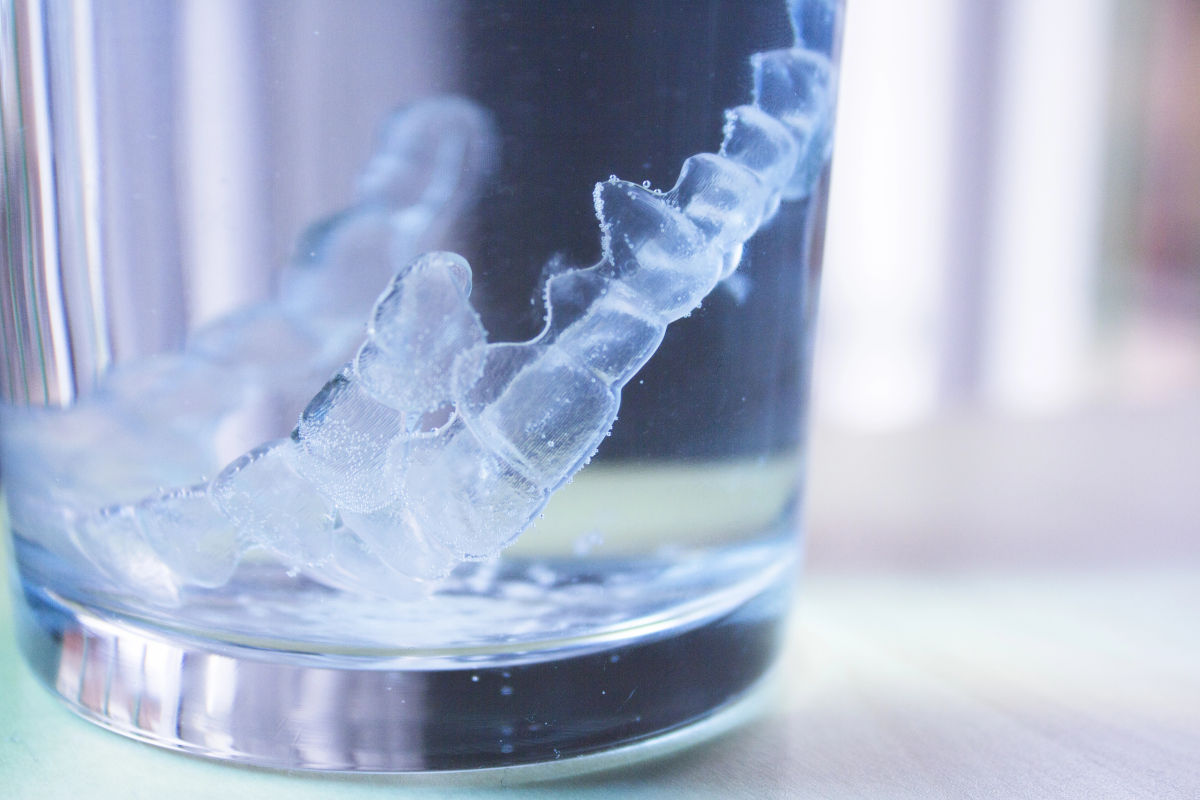
To use them, dissolve one packet of crystals in a cup of lukewarm water, shake gently for about 20 seconds until fully dissolved, and submerge your aligners for 15 minutes. After soaking, brush the trays lightly with a soft toothbrush, rinse under running water, and they are ready to wear again. A 50-packet box typically costs between $35 and $55 on Amazon or through your orthodontist's office, which works out to roughly $0.70 to $1.10 per cleaning session.
"Invisalign cleaning crystals are purpose-engineered for the SmartTrack material. While third-party cleaners can work, the crystals remain our top recommendation because they are tested to avoid material degradation over the full course of treatment."
Effervescent Cleaning Tablets
Brands like Retainer Brite, Polident, and Efferdent offer effervescent tablets that disinfect, deodorize, and remove plaque in a single soak. Drop one tablet into a glass of lukewarm water, place your aligners in the fizzing solution, and wait 15 to 20 minutes. These tablets use a combination of persulfate compounds and sodium bicarbonate to break down organic deposits.
At $5 to $15 for a box of 36 to 120 tablets, this is one of the most cost-effective deep-cleaning options. The main caveat is that some brands contain dyes or strong chemical agents that could cause slight discoloration if aligners are soaked for too long -- always follow the package timing instructions.
Ultrasonic Cleaners
Ultrasonic cleaning devices use high-frequency sound waves (typically 40,000 to 50,000 Hz) to create microscopic cavitation bubbles in water. When these bubbles collapse, they produce tiny shock waves that dislodge plaque, tartar, and bacteria from every surface of the aligner, including areas a brush cannot reach. Simply fill the unit with water, add a cleaning tablet or a few drops of specialized solution, and run the cycle for 3 to 10 minutes.
Quality ultrasonic cleaners range from $25 to $100. The iSonic F3900, for example, is a popular choice among orthodontic patients at around $40. While the upfront cost is higher, the device lasts for years and can also be used for retainers, mouthguards, and even jewelry. Weekly use is typically sufficient to supplement daily brushing and soaking.
DIY Home Cleaning Solutions
If you prefer a budget-friendly approach, two homemade solutions have proven effective. The first is a 50/50 mix of distilled white vinegar and lukewarm water. Soak aligners for 20 to 30 minutes, then brush gently and rinse. The acetic acid in vinegar dissolves mineral deposits and kills many common bacteria. The second option combines one tablespoon of baking soda with half a cup of warm water and an equal amount of 3% hydrogen peroxide. This creates a mild effervescent action that whitens and sanitizes the trays. Soak for 15 to 20 minutes, brush, and rinse.
Both solutions cost less than a dollar per use. The downside is that vinegar can leave a lingering taste if you do not rinse thoroughly, and frequent hydrogen peroxide use may slightly weaken the plastic over time if overconcentrated.
Warning: Never use hot or boiling water to clean your aligners. Temperatures above 150 degrees F (65 degrees C) can permanently warp the thermoplastic material, ruining the tray and potentially setting back your treatment. Always use lukewarm or cool water.
Comparing Invisalign Cleaning Methods Side by Side
| Cleaning Method | Time Needed | Cost Per Use | Antimicrobial Strength | Best For |
|---|---|---|---|---|
| Soft-Bristle Brushing | 1 - 2 min | < $0.05 | Low | Quick daily maintenance |
| Invisalign Crystals | 15 min | $0.70 - $1.10 | High | Manufacturer-recommended daily soak |
| Effervescent Tablets | 15 - 20 min | $0.10 - $0.30 | Moderate - High | Budget-conscious daily soak |
| Ultrasonic Cleaner | 3 - 10 min | $0.01 (electricity) | Very High | Weekly deep clean |
| DIY Vinegar/Baking Soda | 20 - 30 min | < $0.10 | Moderate | Occasional stain removal |
| Factor | Invisalign Crystals | Third-Party Tablets |
|---|---|---|
| Material Compatibility | Tested for SmartTrack | Generally safe; not brand-specific |
| Odor Elimination | Excellent | Good to Excellent |
| Price (50 uses) | $35 - $55 | $5 - $15 |
| Availability | Online / orthodontist office | Any pharmacy or grocery store |
| ADA Seal of Acceptance | No | Some brands (e.g., Polident) |
What to Avoid When Cleaning Your Aligners
Certain products and habits will damage your aligners or your health:
- Toothpaste -- Most contain silica or calcium carbonate abrasives that micro-scratch the surface, making trays cloudy and more prone to harboring bacteria.
- Colored or alcohol-based mouthwash -- Dyes stain the plastic, and alcohol can degrade it over repeated exposure.
- Denture cleaners with persulfate at high concentrations -- Some formulas are too harsh for thin aligner plastic and may cause cracking after prolonged soaking.
- Dishwashers or boiling water -- The heat warps the material beyond repair.
- Scented soaps -- Fragrances and moisturizers leave a film and unpleasant taste.
Warning: If you notice cracks, cloudiness that does not resolve with cleaning, or a tray that no longer fits snugly, contact your orthodontist immediately. A compromised aligner can slow treatment progress or cause unwanted tooth movement.
Daily Oral Hygiene Routine with Invisalign
Clean aligners are only half the equation. Your teeth and gums need meticulous attention too, because any plaque left on your teeth before reinserting the trays gets trapped against your enamel for hours. Here is the daily routine recommended by orthodontists in 2026:
- Remove aligners before eating or drinking anything other than plain water.
- Brush your teeth for a full two minutes with fluoride toothpaste after every meal or snack.
- Floss or use a water flosser at least once daily, ideally before your evening cleaning session.
- Rinse your aligners under cool water every time you remove them.
- Soak your aligners in a cleaning solution (crystals, tablet, or DIY) at least once per day, ideally during a meal so you are not losing wear time.
- Brush your aligners gently with a soft brush and clear soap before reinserting.
- Store aligners in the protective case whenever they are not in your mouth -- never in a napkin, pocket, or open counter.
Good to Know: If you cannot brush after a meal, rinse your mouth thoroughly with plain water and chew sugar-free gum containing xylitol for 5 minutes before reinserting your aligners. This stimulates saliva flow and reduces acid levels until you can brush properly.
Cleaning Costs Breakdown
Keeping your aligners clean does not have to break the bank. Here is what patients typically spend over a full 12-month Invisalign treatment based on the cleaning method they choose:
- Brushing only: $4 to $10 total (spare toothbrush + liquid soap)
- Effervescent tablets (daily): $18 to $55 per year
- Invisalign Cleaning Crystals (daily): $255 to $400 per year
- Ultrasonic cleaner (one-time purchase + weekly use): $25 to $100 upfront
- Combination approach (brushing + tablets + weekly ultrasonic): $50 to $130 per year
Most orthodontists recommend the combination approach as the best balance of effectiveness and affordability. You get daily surface cleaning from brushing, antimicrobial action from the soaking tablets, and a thorough weekly deep clean from the ultrasonic device.
Good to Know: Some orthodontic offices include Invisalign cleaning crystal starter kits in their treatment fees. Ask your provider whether cleaning supplies are bundled into your overall Invisalign cost, which typically ranges from $3,000 to $8,000 depending on case complexity.
Frequently Asked Questions
Can you clean Invisalign with baking soda alone?
Yes, you can dissolve one tablespoon of baking soda in a cup of lukewarm water and soak your aligners for 15 to 20 minutes. Baking soda is mildly alkaline and helps neutralize acids and lift stains. However, avoid applying dry baking soda directly to the trays and scrubbing, because the granules can scratch the surface. For best results, combine baking soda with a small amount of hydrogen peroxide to boost antimicrobial action.
Why are my aligners turning yellow even with cleaning?
Yellowing usually results from salivary protein buildup that bonds to the plastic over time, exposure to colored foods or beverages, or eating or drinking with the trays in. If daily cleaning is not removing the discoloration, try soaking in a hydrogen peroxide solution or using an ultrasonic cleaner. Remember that each set of trays is only worn for one to two weeks, so minor discoloration near the end of a tray cycle is normal and not harmful.
How often should I deep-clean my aligners?
Most orthodontists recommend at least one soaking session per day (using crystals, tablets, or a DIY solution) combined with gentle brushing after every meal. A weekly ultrasonic cleaning session provides an extra level of disinfection. The ADA suggests cleaning removable appliances at least daily, but more frequent cleaning correlates with fewer hygiene-related complications.
Can I use mouthwash to clean my Invisalign trays?
It depends on the mouthwash. Clear, alcohol-free rinses like CloSYS or Crest Pro-Health (alcohol-free version) can be used for a quick soak. Avoid colored mouthwashes, which will stain the plastic, and alcohol-based formulas, which may degrade the SmartTrack material with repeated use. Mouthwash is not a substitute for proper soaking with a dedicated aligner cleaner.
Is it safe to use hydrogen peroxide on aligners?
Standard 3% hydrogen peroxide sold at pharmacies is safe for occasional use. Mix equal parts peroxide and water, and soak for no more than 30 minutes. Rinse thoroughly afterward. Higher concentrations or prolonged soaking could weaken the plastic over time. If you use peroxide daily, monitor your trays for any signs of brittleness or clouding and switch to a gentler option if you notice changes.
Sources
- American Dental Association. "Oral Health Topics: Removable Appliance Care." ADA.org, updated January 2026.
- Levrini, L., et al. "Microbiological Analysis of Clear Aligners." Journal of Clinical Orthodontics, vol. 59, no. 4, 2025, pp. 211-220.
- Align Technology, Inc. "Invisalign Cleaning System Instructions for Use." Invisalign.com, 2026.
- Agrawal, A., and Agrawal, N. "Efficacy of Cleaning Agents on Orthodontic Aligners: A Systematic Review." European Journal of Orthodontics, vol. 47, no. 2, 2025, pp. 134-142.
- American Association of Orthodontists. "Patient Care: Aligner Hygiene Guidelines." AAOinfo.org, revised February 2026.
- Low, B., et al. "Effect of Ultrasonic Cleaning on Biofilm Removal from Thermoplastic Aligners." The Angle Orthodontist, vol. 95, no. 1, 2025, pp. 88-95.
- U.S. Food and Drug Administration. "Dental Devices: Clear Orthodontic Aligners -- Safety and Effectiveness." FDA.gov, 2025.